Make.com:
From Assistant to Autonomous Agents
Building automations in Make is incredibly powerful, but the scenario builder's sheer complexity created a steep learning curve. What began as a conversational AI Assistant designed to answer support questions and draft basic flows quickly evolved into something much bigger: fully autonomous AI Agents capable of executing non-deterministic, complex tasks directly on the canvas.
Timeline
Timeline
2023 - 2025
Role
Role
Design Lead
Team
Team
8+ Devs, 1 PM
01
//Challenges
Challenges.
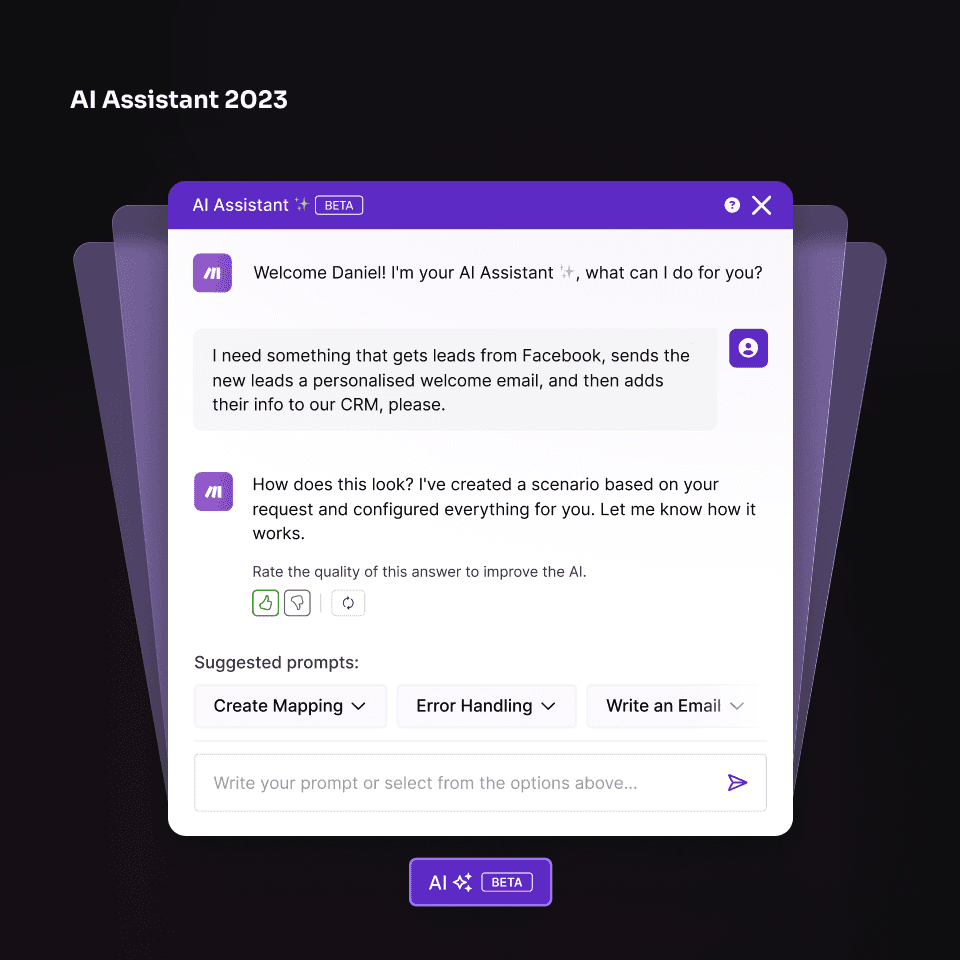
Our initial AI Assistant lived in a chat window and was limited to building deterministic scenarios. We quickly hit a wall. The success rate was low, hallucinations were common, and the UX was essentially a "black box." Users were understandably anxious. Because the Assistant wasn't transparent about how it was building automations, users didn't trust it with their critical workflows. They needed more than just a chat interface; they needed a powerful co-pilot, but we had to solve the profound lack of user trust and system transparency first.
02
//Solutions
Solutions.
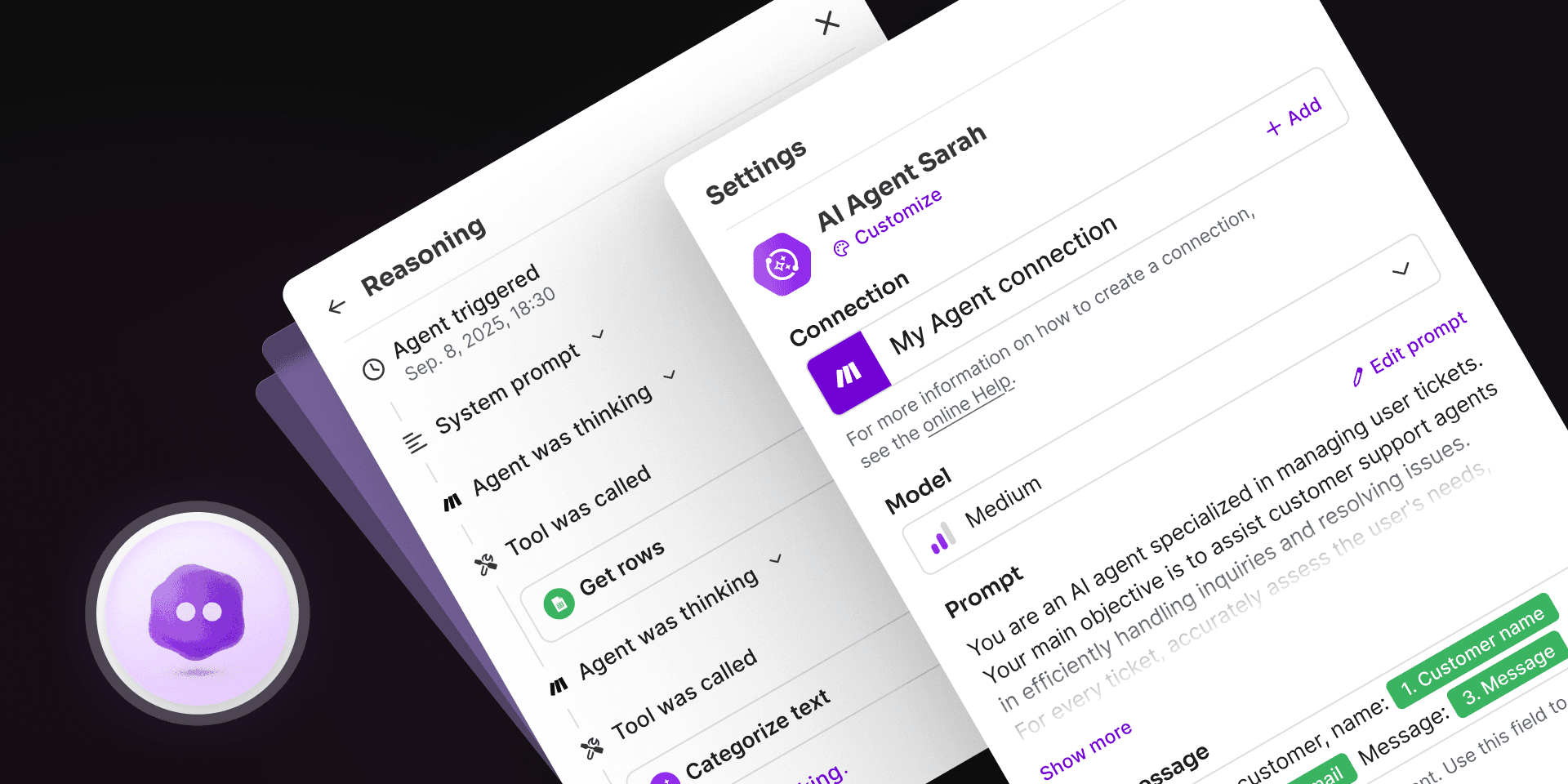
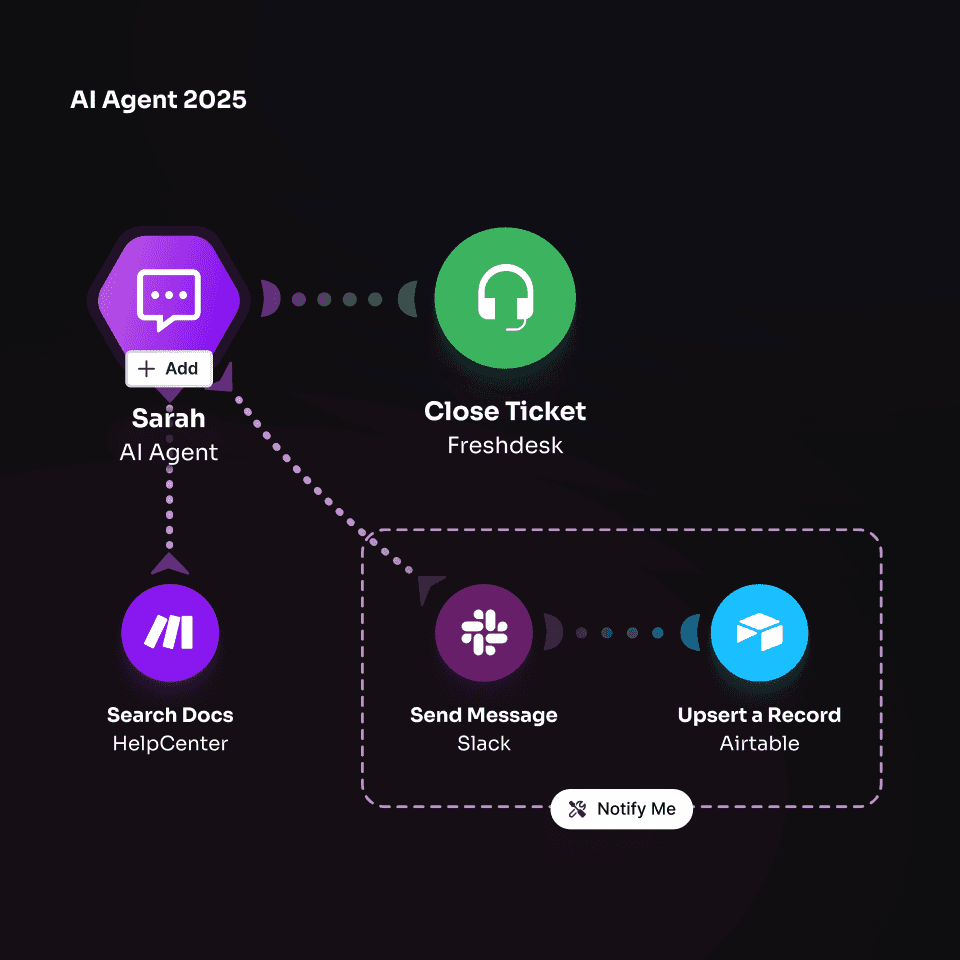
We completely pivoted our approach, moving the AI out of a chat bubble and natively onto the canvas as an Agent. To rebuild trust, I helped design a transparent "thinking UI" that exposed the AI's exact decision-making process. Instead of a single, mysterious module, users could now see a step-by-step breakdown of why the Agent was taking specific actions.
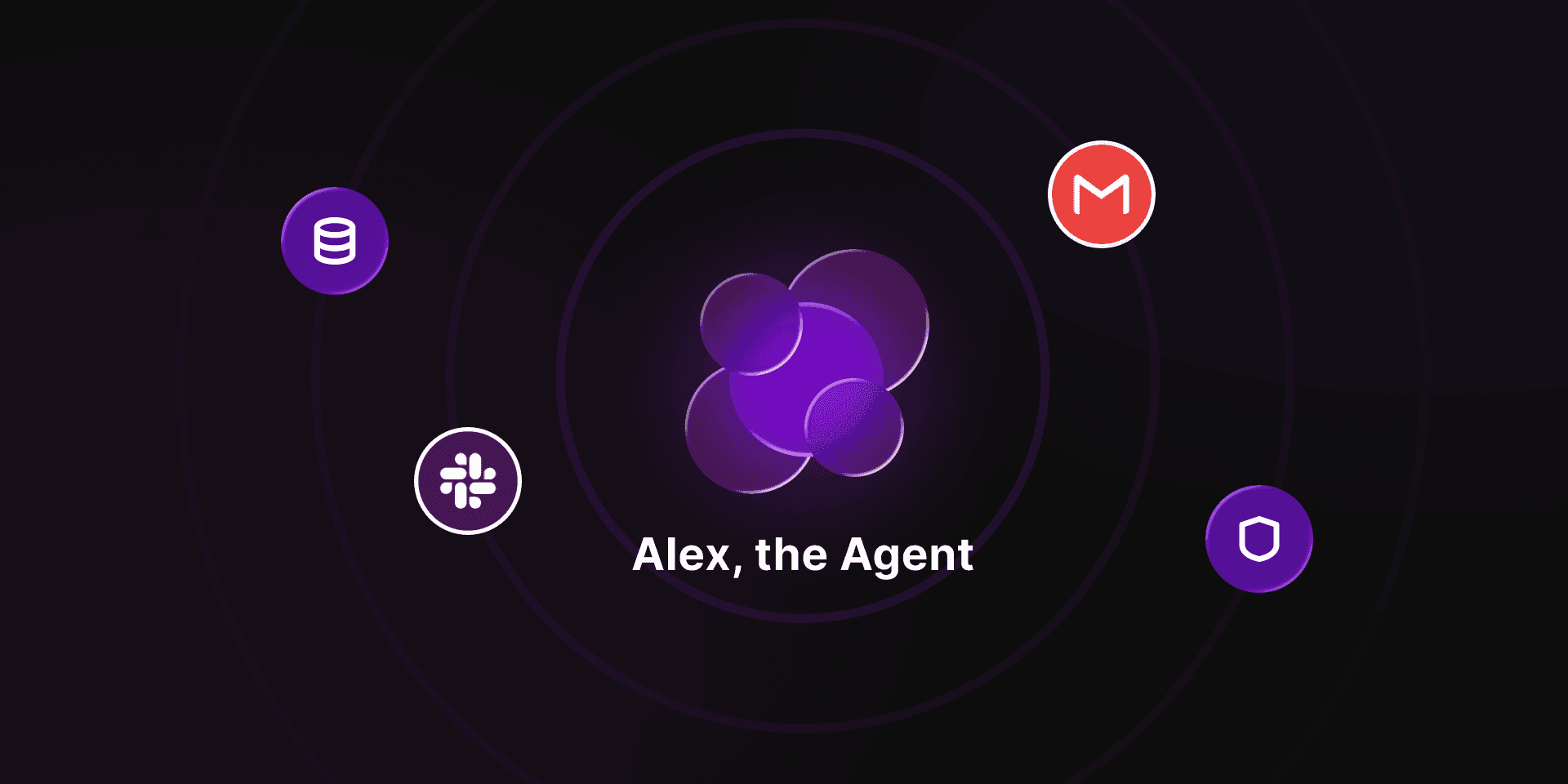
Because fear of breaking existing automations was high, we introduced emotional safety nets: an interactive rating system to train the model, a global "undo" action, and a crucial safety feature that automatically duplicated a scenario before the AI made any changes. To manage this massive transition, I co-led the UX strategy alongside a new design hire. We deliberately let the legacy Assistant and the new Agent co-exist in the UI. Once the Agent's success rate definitively eclipsed the Assistant, we boldly removed the legacy chat. I systematically onboarded my co-designer throughout this process, officially handing over the project only when I was certain the vision was secure and the team was fully empowered.
03
//Results
Results.
After dozens of hours of user research and direct testing, the impact of shifting from a deterministic chat bot to a non-deterministic Agent became undeniably clear. The transparent "thinking UI" and built-in safety mechanisms dramatically reduced user anxiety and directly increased successful automation deployments. By validating the Agent's superiority in real-world usage, we were able to successfully sunset the old Assistant without disrupting our core users. This architectural and psychological foundation proved so effective that it is now powering Make's next massive release: the ultimate AI Agent that merges conversational ease with unparalleled execution power.



03
//Contact
LET'S TALK
Let's Work
TOGETHER.
I'm passionate about design and always eager to keep learning and growing. Let's make something amazing together!
I'm passionate about design and always eager to keep learning and growing.
Let's make something amazing together!
I've collaborated with individuals, startups, and corporations, adapting to diverse needs and environments.
By blending creativity with strategic thinking, I deliver compelling solutions that meet project goals and enhance stakeholder engagement.
I've collaborated with individuals, startups, and corporations, adapting to diverse needs and environments. By blending creativity with strategic thinking, I deliver compelling solutions that meet project goals and enhance stakeholder engagement.
LOCAL/
3:48:55 PM
Daniel Munzar © 2026
LOCAL/
3:48:55 PM
Daniel Munzar © 2026
Make.com:
From Assistant to Autonomous Agents
Building automations in Make is incredibly powerful, but the scenario builder's sheer complexity created a steep learning curve. What began as a conversational AI Assistant designed to answer support questions and draft basic flows quickly evolved into something much bigger: fully autonomous AI Agents capable of executing non-deterministic, complex tasks directly on the canvas.
Timeline
2023 - 2025
Role
Design Lead
Team
8+ Devs, 1 PM
//Challenges
01
Challenges.
Our initial AI Assistant lived in a chat window and was limited to building deterministic scenarios. We quickly hit a wall. The success rate was low, hallucinations were common, and the UX was essentially a "black box." Users were understandably anxious. Because the Assistant wasn't transparent about how it was building automations, users didn't trust it with their critical workflows. They needed more than just a chat interface; they needed a powerful co-pilot, but we had to solve the profound lack of user trust and system transparency first.
//Solutions
02
Solutions.
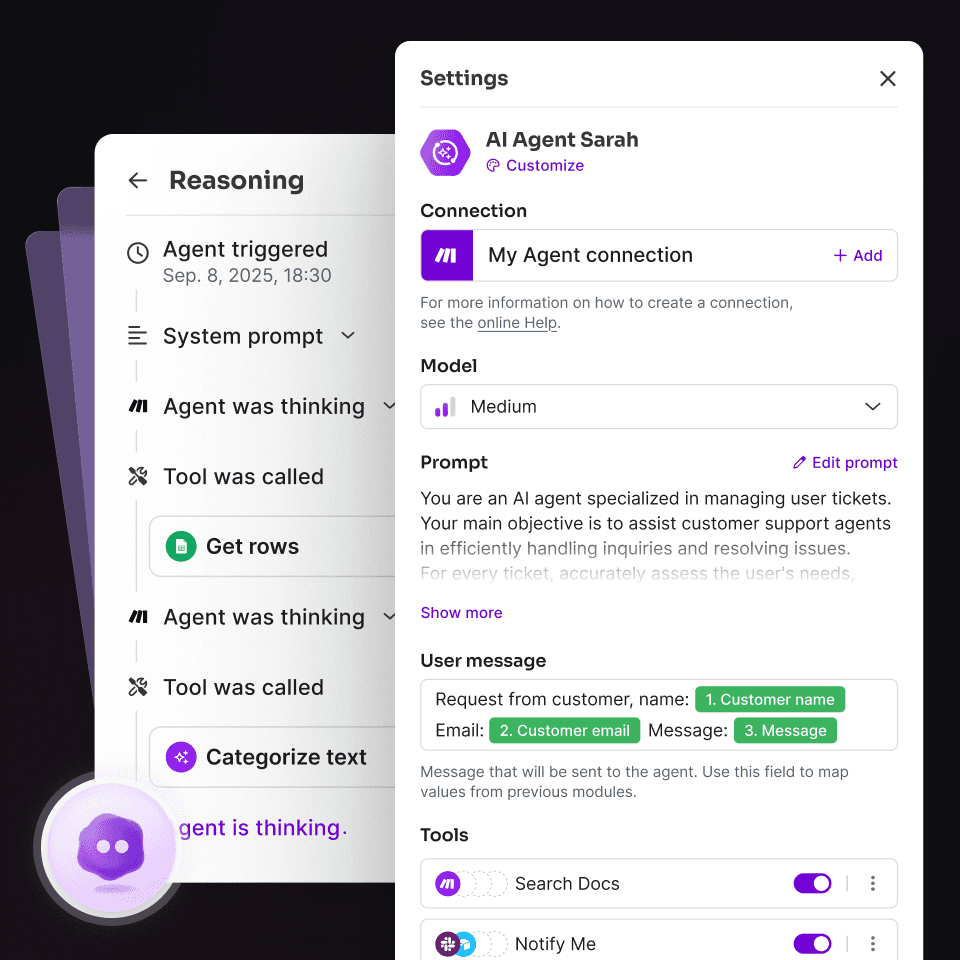
We completely pivoted our approach, moving the AI out of a chat bubble and natively onto the canvas as an Agent. To rebuild trust, I helped design a transparent "thinking UI" that exposed the AI's exact decision-making process. Instead of a single, mysterious module, users could now see a step-by-step breakdown of why the Agent was taking specific actions.
Because fear of breaking existing automations was high, we introduced emotional safety nets: an interactive rating system to train the model, a global "undo" action, and a crucial safety feature that automatically duplicated a scenario before the AI made any changes. To manage this massive transition, I co-led the UX strategy alongside a new design hire. We deliberately let the legacy Assistant and the new Agent co-exist in the UI. Once the Agent's success rate definitively eclipsed the Assistant, we boldly removed the legacy chat. I systematically onboarded my co-designer throughout this process, officially handing over the project only when I was certain the vision was secure and the team was fully empowered.
//Results
03
Results.
After dozens of hours of user research and direct testing, the impact of shifting from a deterministic chat bot to a non-deterministic Agent became undeniably clear. The transparent "thinking UI" and built-in safety mechanisms dramatically reduced user anxiety and directly increased successful automation deployments. By validating the Agent's superiority in real-world usage, we were able to successfully sunset the old Assistant without disrupting our core users. This architectural and psychological foundation proved so effective that it is now powering Make's next massive release: the ultimate AI Agent that merges conversational ease with unparalleled execution power.
//Contact
LET'S TALK
Let's Work
TOGETHER.
I'm passionate about design and always eager to keep learning and growing. Let's make something amazing together!
I've collaborated with individuals, startups, and corporations, adapting to diverse needs and environments. By blending creativity with strategic thinking, I deliver compelling solutions that meet project goals and enhance stakeholder engagement.
3:48:55 PM
LOCAL/
Daniel Munzar © 2026
Make.com:
From Assistant to Autonomous Agents
Building automations in Make is incredibly powerful, but the scenario builder's sheer complexity created a steep learning curve. What began as a conversational AI Assistant designed to answer support questions and draft basic flows quickly evolved into something much bigger: fully autonomous AI Agents capable of executing non-deterministic, complex tasks directly on the canvas.
Timeline
2023 - 2025
Role
Design Lead
Team
8+ Devs, 1 PM
//Challenges
01
Challenges.
Our initial AI Assistant lived in a chat window and was limited to building deterministic scenarios. We quickly hit a wall. The success rate was low, hallucinations were common, and the UX was essentially a "black box." Users were understandably anxious. Because the Assistant wasn't transparent about how it was building automations, users didn't trust it with their critical workflows. They needed more than just a chat interface; they needed a powerful co-pilot, but we had to solve the profound lack of user trust and system transparency first.
//Solutions
02
Solutions.
We completely pivoted our approach, moving the AI out of a chat bubble and natively onto the canvas as an Agent. To rebuild trust, I helped design a transparent "thinking UI" that exposed the AI's exact decision-making process. Instead of a single, mysterious module, users could now see a step-by-step breakdown of why the Agent was taking specific actions.
Because fear of breaking existing automations was high, we introduced emotional safety nets: an interactive rating system to train the model, a global "undo" action, and a crucial safety feature that automatically duplicated a scenario before the AI made any changes. To manage this massive transition, I co-led the UX strategy alongside a new design hire. We deliberately let the legacy Assistant and the new Agent co-exist in the UI. Once the Agent's success rate definitively eclipsed the Assistant, we boldly removed the legacy chat. I systematically onboarded my co-designer throughout this process, officially handing over the project only when I was certain the vision was secure and the team was fully empowered.
//Results
03
Results.
After dozens of hours of user research and direct testing, the impact of shifting from a deterministic chat bot to a non-deterministic Agent became undeniably clear. The transparent "thinking UI" and built-in safety mechanisms dramatically reduced user anxiety and directly increased successful automation deployments. By validating the Agent's superiority in real-world usage, we were able to successfully sunset the old Assistant without disrupting our core users. This architectural and psychological foundation proved so effective that it is now powering Make's next massive release: the ultimate AI Agent that merges conversational ease with unparalleled execution power.
//Contact
LET'S TALK
Let's Work
TOGETHER.
I'm passionate about design and always eager to keep learning and growing. Let's make something amazing together!
I've collaborated with individuals, startups, and corporations, adapting to diverse needs and environments.
By blending creativity with strategic thinking, I deliver compelling solutions that meet project goals and enhance stakeholder engagement.
3:48:55 PM
LOCAL/
Daniel Munzar © 2026
Make.com:
From Assistant to Autonomous Agents
Building automations in Make is incredibly powerful, but the scenario builder's sheer complexity created a steep learning curve. What began as a conversational AI Assistant designed to answer support questions and draft basic flows quickly evolved into something much bigger: fully autonomous AI Agents capable of executing non-deterministic, complex tasks directly on the canvas.
Timeline
2023 - 2025
Role
Design Lead
Team
8+ Devs, 1 PM
//Challenges
01
Challenges.
Our initial AI Assistant lived in a chat window and was limited to building deterministic scenarios. We quickly hit a wall. The success rate was low, hallucinations were common, and the UX was essentially a "black box." Users were understandably anxious. Because the Assistant wasn't transparent about how it was building automations, users didn't trust it with their critical workflows. They needed more than just a chat interface; they needed a powerful co-pilot, but we had to solve the profound lack of user trust and system transparency first.
//Solutions
02
Solutions.
We completely pivoted our approach, moving the AI out of a chat bubble and natively onto the canvas as an Agent. To rebuild trust, I helped design a transparent "thinking UI" that exposed the AI's exact decision-making process. Instead of a single, mysterious module, users could now see a step-by-step breakdown of why the Agent was taking specific actions.
Because fear of breaking existing automations was high, we introduced emotional safety nets: an interactive rating system to train the model, a global "undo" action, and a crucial safety feature that automatically duplicated a scenario before the AI made any changes. To manage this massive transition, I co-led the UX strategy alongside a new design hire. We deliberately let the legacy Assistant and the new Agent co-exist in the UI. Once the Agent's success rate definitively eclipsed the Assistant, we boldly removed the legacy chat. I systematically onboarded my co-designer throughout this process, officially handing over the project only when I was certain the vision was secure and the team was fully empowered.
//Results
03
Results.
After dozens of hours of user research and direct testing, the impact of shifting from a deterministic chat bot to a non-deterministic Agent became undeniably clear. The transparent "thinking UI" and built-in safety mechanisms dramatically reduced user anxiety and directly increased successful automation deployments. By validating the Agent's superiority in real-world usage, we were able to successfully sunset the old Assistant without disrupting our core users. This architectural and psychological foundation proved so effective that it is now powering Make's next massive release: the ultimate AI Agent that merges conversational ease with unparalleled execution power.
//Contact
LET'S TALK
Let's Work
TOGETHER.
I'm passionate about design and always eager to keep learning and growing. Let's make something amazing together!
I've collaborated with individuals, startups, and corporations, adapting to diverse needs and environments. By blending creativity with strategic thinking, I deliver compelling solutions that meet project goals and enhance stakeholder engagement.
3:48:55 PM
LOCAL/
Daniel Munzar © 2026